
Youth Mental Health
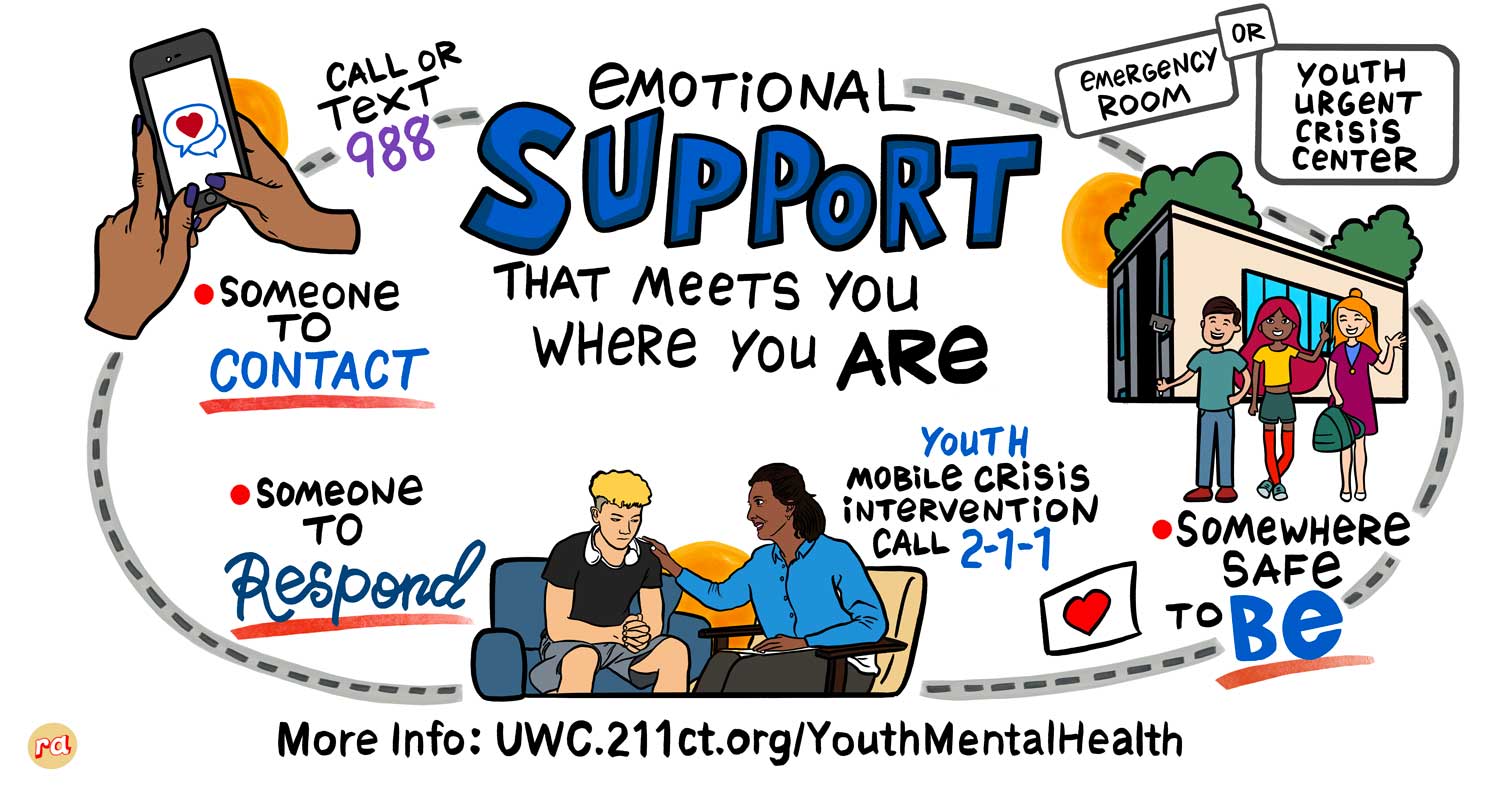
Are you feeling stressed, anxious or overwhelmed? Having thoughts of self-harm or suicide? In need of mental health support?
Parents: is your child experiencing these thoughts and feelings?
You don’t have to handle it alone. Connect to help in one of three ways:
- Someone to Contact: Call or text 988 anytime for free, confidential support, 24/7.
- Someone to Respond: Call 2-1-1 and press option “1” for “crisis.” A trained counselor from youth mobile crisis intervention services will come to you quickly to provide support at home, in school or in another preferred location.
- Somewhere Safe to Be: Visit a safe Youth Urgent Crisis Center for specialized compassionate care. No appointment or insurance required.
Other Crisis Services:
Connecticut now has two youth hospital-based crisis units; one at Yale New Haven Health and one at Stamford Health. Both use the Emergency Psychiatric Assessment, Treatment and Healing (EmPATH) model. EmPATH units are specialized spaces within the hospital, separate from the main emergency department, for children and adolescents experiencing a mental health crisis. Unlike a traditional emergency room, it offers focused psychiatric care right away without long waits, in a calm, therapeutic setting built to help kids stabilize and heal.
Connect to Help
- Urgent Crisis Centers
- 988 Lifeline
- Youth Mobile Crisis
- Connecting to Care
- We Are CT
- CT Support Group
Toolkit of Marketing Materials
Working in collaboration with the Tow Youth Justice Institute, the State of Connecticut’s Behavioral Health Advocate, Connecticut Department of Children and Families, Youth Mobile Crisis Intervention and Youth Urgent Crisis Centers, United Way of Connecticut has created a Youth Behavioral Health Crisis Continuum Toolkit for Connecticut to use agency wide. The messaging in this toolkit is based on SAMHSA’s crisis response framework: Someone to Contact, Someone to Respond and Somewhere Safe to Be.
This toolkit will create statewide consistency in messaging and marketing as you update your website information, email templates and create social media posts. By sharing this message together in one voice, we can bring greater visibility, awareness and understanding about the many entry points for youth to receive mental health support.